

CURRENT AFFAIRS | MARCH 2026
Prelims: AI Energy Consumption, Data Centres, Environmental Impact, Water Footprint
Mains: GS Paper III (Environment — Climate Change, Energy), GS Paper II (Governance — Regulatory Gaps)
Judicial Services Relevance: Art. 21 (right to clean environment, right to water); Art. 39(b) (distributive justice); Art. 48A (environmental protection); Environmental jurisprudence; PIL jurisdiction
The Environmental Footprint of AI: An Emerging Legal Challenge
The rapid proliferation of artificial intelligence has created an unprecedented demand for computational infrastructure, with profound environmental consequences that India’s legal and regulatory framework is ill-equipped to address. The energy consumption of AI training and inference — projected to reach 945 terawatt-hours (TWh) globally by 2030 — presents a fundamental tension between technological advancement and environmental protection, one that judicial officers will increasingly be called upon to adjudicate.
- Projected global AI energy consumption by 2030: 945 TWh
- Single large data centre power usage: Equivalent to a mid-sized city
- Data centre water footprint: 6x Denmark’s total national water consumption
- Key concern for India: Competition between data centres and residential/agricultural electricity
Grid Stress and Energy Demands
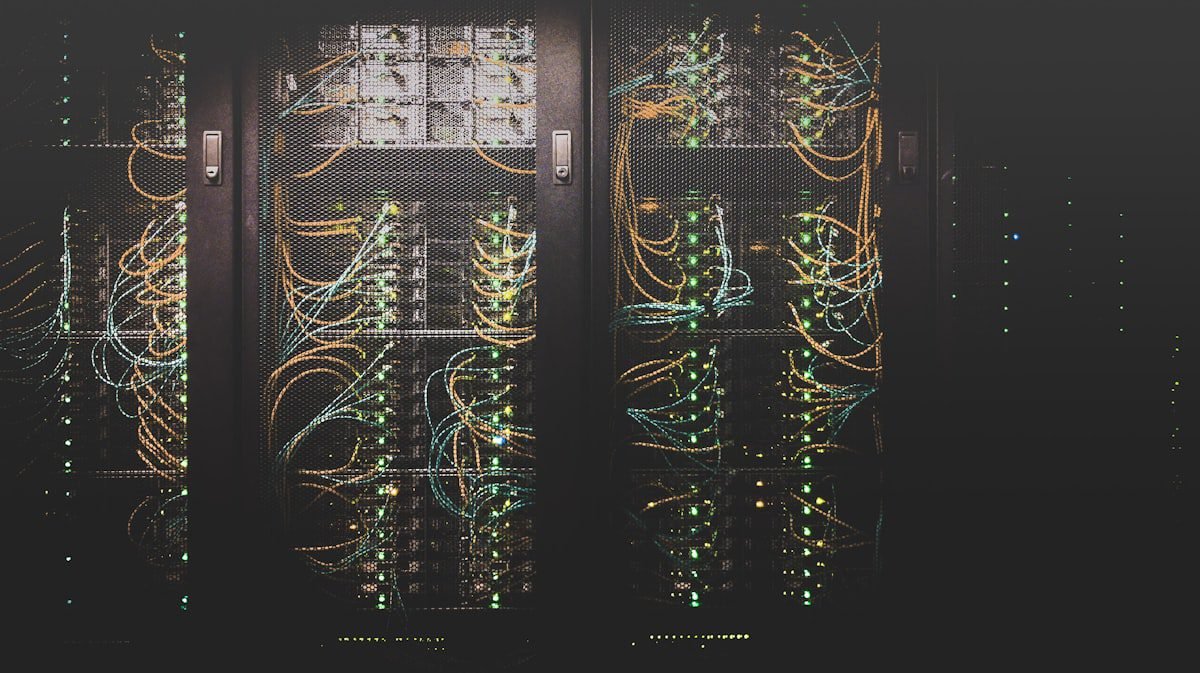
Data centres, the physical infrastructure underpinning AI operations, are extraordinarily energy-intensive. A single large-scale data centre can consume as much electricity as a mid-sized city. The exponential growth in AI model complexity — with training runs for frontier models requiring millions of GPU-hours — has intensified this energy demand to the point where it threatens grid stability in several regions.
In India, where electricity access remains uneven and renewable energy transition is ongoing, the diversion of grid capacity to serve data centres raises questions of distributive justice. When a data centre’s power consumption competes with residential and agricultural electricity needs, the allocation decision carries constitutional implications under:
- Article 39(b) — material resources of the community distributed for the common good
- Article 21 — right to livelihood and right to electricity as part of right to life
- Article 48A — state obligation to protect and improve the environment
Water Consumption: The Hidden Environmental Cost
Perhaps the most underappreciated environmental impact of data centres is their water consumption. Cooling systems for large-scale computing facilities consume staggering quantities of water — by some estimates, the global data centre industry’s water footprint is six times that of Denmark’s total national water consumption.
In a water-stressed country like India, where the right to water has been recognized as part of the right to life under Article 21, this raises critical legal questions:
- Can data centres be required to obtain water usage permits similar to industrial users?
- Should Environmental Impact Assessments (EIA) be mandatory for large data centre projects?
- Can PILs challenge data centre water consumption under the public trust doctrine?
The Supreme Court in M.C. Mehta v. Union of India and Vellore Citizens’ Welfare Forum v. UoI (1996) established the precautionary principle and polluter pays principle as part of Indian environmental law. These principles logically extend to AI infrastructure — data centres causing environmental harm should bear the cost of remediation. The National Green Tribunal (NGT) may emerge as the appropriate forum for adjudicating data centre environmental disputes.
Regulatory Gaps and the Way Forward
India currently lacks a comprehensive regulatory framework specifically addressing the environmental impact of data centres. Key regulatory needs include:
- Mandatory EIA clearance for data centres above a specified capacity threshold
- Renewable energy mandates — requiring data centres to source a minimum percentage of power from renewables
- Water audit requirements — periodic disclosure of water consumption and cooling efficiency
- Carbon disclosure norms — mandatory reporting of greenhouse gas emissions from AI operations
- Zoning regulations — preventing data centres in water-stressed or power-deficit regions
For judicial aspirants: (1) Can the precautionary principle from Vellore Citizens (1996) be invoked to regulate data centres even before measurable harm occurs? (2) Should data centres be classified as “industries” under environmental legislation, triggering existing regulatory frameworks? (3) How does the intergenerational equity principle apply when current AI development depletes water and energy resources?
Source: UPSC Essentials, The Indian Express — March 2026
Practice Quiz
Test your understanding with these 10 MCQs:
Practice Quiz — 10 Judiciary Exam-Style Questions
Click an option to reveal the answer and explanation.