

Judiciary prelims preparation fails for a predictable reason: candidates study law the way they studied it in college, and the preliminary examination does not reward that. Prelims is a screening test built on precise recall of bare provisions under time pressure. It does not ask you to argue; it asks whether you know which section says what. Understanding that difference is worth more than another month of reading commentaries.
This guide sets out a sixty-day preliminary-stage plan for civil judge aspirants, with the caveat that every state judicial service runs its own cycle. Confirm the vacancy count, eligibility, syllabus and exam dates for your state against the official recruiting body — for Bihar, that is the Bihar Public Service Commission; other states publish through their respective High Courts or Public Service Commissions.
The three-stage structure
Judicial service recruitment across states follows a common shape: a Preliminary objective screening test, a Mains written examination of descriptive papers, and a Viva Voce interview. Prelims marks are almost always screening-only and do not count towards the final merit — but they eliminate the overwhelming majority of candidates. Treat prelims as a filter to be cleared decisively, not narrowly.
What prelims actually rewards
Three habits separate candidates who clear from those who repeatedly miss by a few marks:
- Bare Act fluency. The single highest-yield activity in judiciary preparation is reading bare Acts repeatedly until section numbers and their contents are linked automatically. Commentaries explain; bare Acts are what is examined.
- Recall over reasoning. With roughly a minute per question, you cannot derive an answer. You either know the provision or you do not.
- Breadth discipline. Prelims spans substantive law, procedural law and a general-studies component. Candidates who over-invest in their favourite subject and neglect the general paper lose marks that were the cheapest on offer.
The sixty-day plan
Days 1–20: Procedure first
Begin with the procedural codes — civil procedure, criminal procedure and evidence. They carry heavy weight, they are the most section-number-intensive, and they are the slowest to consolidate, which is exactly why they must come first rather than last.
Read each code alongside the bare Act, not instead of it. For civil procedure, anchor yourself in the structure — jurisdiction, pleadings, orders, appeals, execution. For criminal procedure, track the chronology of a case from information to trial to appeal, since the code is organised along that spine. For evidence, concentrate on relevancy, admissions and confessions, burden of proof, and examination of witnesses.
Days 21–40: Substantive law and local statutes
Move to contract, torts, property, and the substantive criminal law, then to the specific local and state Acts your state’s syllabus prescribes. This last category is routinely underestimated. State-specific statutes are low-competition marks: fewer candidates prepare them properly, and the questions tend to be direct.
Constitutional law sits across both phases — keep a daily slot for it rather than blocking it into a single week.
Days 41–55: Test-and-repair cycle
Switch the centre of gravity from reading to testing. Take a full-length mock every second day under exam conditions, and treat the analysis session afterwards as the real work. Maintain a single error register — one page per subject — recording only the provisions you got wrong. In the final week this register, not your textbooks, is your revision material.
Aspirants running this cycle with us do it through the classroom and live classes, with mains-oriented work continuing in parallel on the HJS desk.
Days 56–60: Consolidation
Stop new material. Revise the error register, re-read the bare Acts of the two subjects you score worst in, and revise the general-studies component, which decays fastest. Do not take a mock in the final forty-eight hours; the marginal information is small and the confidence cost of a bad score is not.
Preparing for mains while prelims is live
The gap between prelims and mains in most states is too short to begin descriptive preparation from scratch. Candidates who wait for the prelims result before writing a single answer are effectively conceding the mains.
Write one full-length answer a week throughout your prelims preparation. It costs ninety minutes and preserves the writing stamina, structure and handwriting speed that mains demands. Our HJS Mains programme is designed around this overlap. Candidates hedging across law-adjacent recruitment also look at the IBPS SO Law Officer track, which draws on much of the same substantive base, and the All Access Pass covers the full library.
Frequently asked questions
What is the structure of a state judicial service examination?
Judicial service recruitment generally has three stages: a preliminary objective screening test, a mains written examination consisting of descriptive papers, and a viva voce interview. Preliminary marks are usually screening-only and do not count towards the final merit list.
Do preliminary examination marks count in the final merit?
In most state judicial services the preliminary stage is qualifying only, with the final merit determined by the mains examination and the interview. Candidates should confirm this in the official notification for their state, as the rules vary.
How important are bare Acts for judiciary prelims?
They are the core resource. The preliminary paper tests precise recall of statutory provisions, so repeated reading of bare Acts until section numbers and their contents connect automatically is the highest-yield preparation activity, ahead of commentaries.
Should I prepare for mains before the prelims result?
Yes. The interval between the two stages is usually too short to build descriptive writing skills from scratch. Writing one full-length answer each week during prelims preparation preserves writing speed and structure at minimal cost.
How much time is needed to prepare for judiciary prelims?
A focused sixty-day cycle is workable for candidates who have already covered the syllabus once and need consolidation. First-time aspirants should plan for a longer runway, prioritising the procedural codes and evidence, which take the longest to consolidate.
Sources
- Bihar Public Service Commission — official website
Vacancy details, eligibility conditions, syllabus and exam dates differ by state and change between cycles. Candidates must verify all details against the official notification issued by the relevant Public Service Commission or High Court.
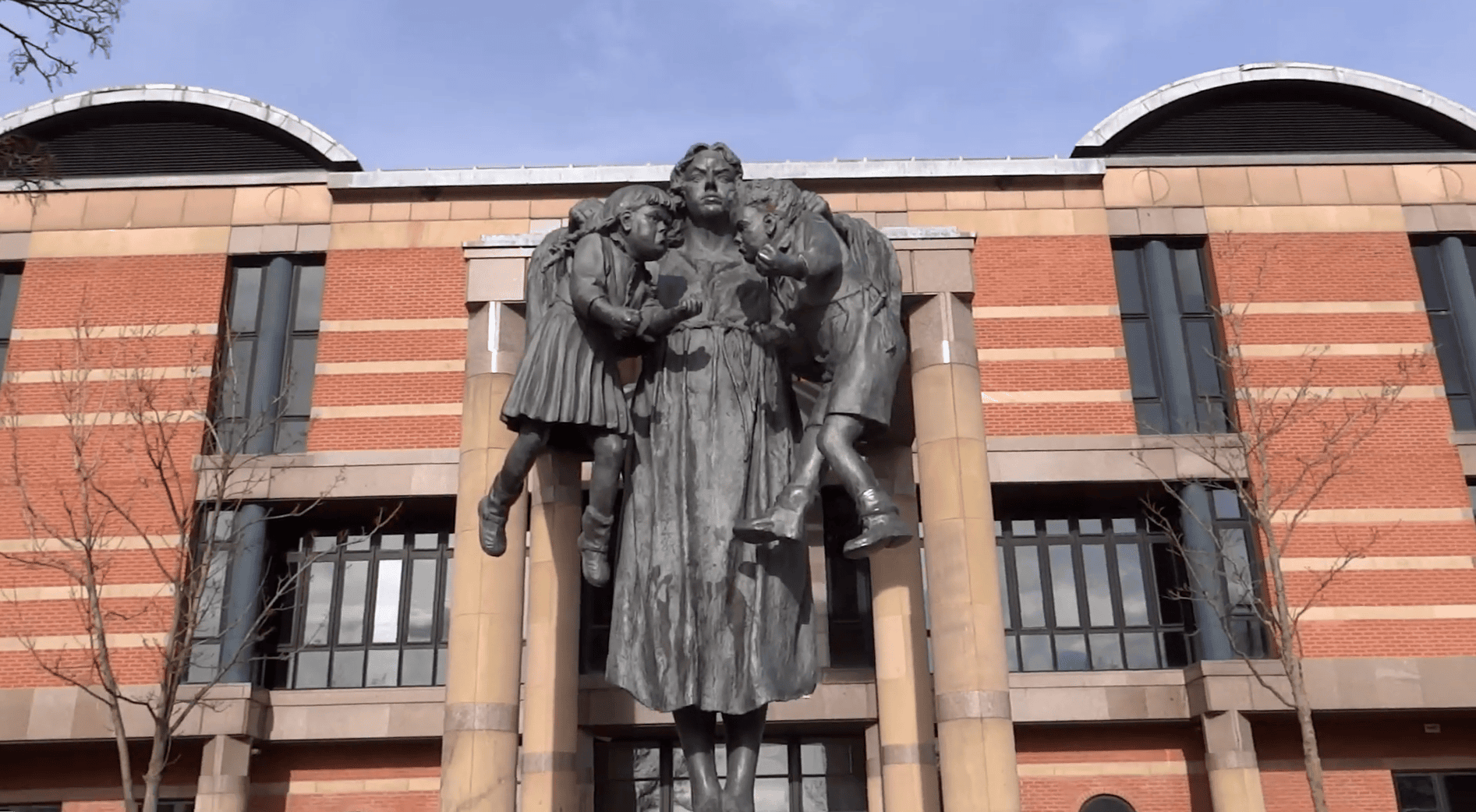
Featured image: “Scales of Justice statue, Middlesbrough” by Londisland, via Wikimedia Commons, licensed under CC BY.